 Posted by
Vienna’s historic centre is compact, but a pleasant walk depends on choosing a sensible route and leaving time for breaks. This guide combines a self-guided itinerary with practical advice about distances, sightseeing buses and guided tours. It is intended for visitors who want to see the central landmarks on foot and understand when it is worth booking a guide or using public transport for a longer segment.
A large part of the many tourists in Vienna take part in a city walk or a city tour. There are very many different providers. In the following we would like to present some offers.
We have selected city walks that have received good reviews from participants on the internet and are not too expensive.
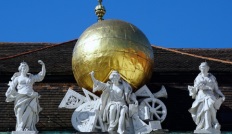
Book a guided Vienna city walk
A two-hour guided route covers central landmarks, with a live guide in English, German or Italian. Check the date, meeting point and what the tour does not include.
Guided Vienna walking tours
A city tour of Vienna does not necessarily have to be done as part of a group. Another option is to book a private guide.
Advantages:
One major benefit is the opportunity to ask many more questions. In addition, the route, topics and main focus of the city tour can often be tailored to personal interests. It is also usually possible to arrange a hotel pick-up or agree on an individual meeting point. With private city tours, guests can often choose the date and starting time themselves.
Disadvantages:
The main drawback is the price. A private guided tour of Vienna is generally more expensive than taking part in a standard group tour.
Private guide: A private tour can be tailored around architecture, imperial history, music or another interest. Ask in advance about meeting point, duration, accessibility, language and whether transport or entrance tickets are included. Compare the overall group price with a small-group tour before booking.
Where to stay for a walking holiday in Vienna
Central districts around Innere Stadt, MuseumsQuartier and Wien Mitte place many sights within walking distance. Compare transport access and room location before booking.
When a sightseeing bus is useful
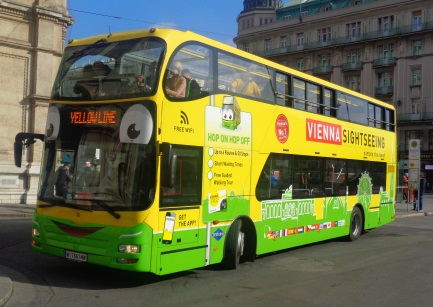
There are very many providers of city tours, walking tours etc. in Vienna. We really liked the buses of Vienna Sightseeing Tours. The buses run in 3 lines through Vienna. You can get off wherever you like and continue with a later bus. This way you see a lot, including all the important sights outside the city centre. You can see what you want. Since there are three lines, you can get to all the important sights. Really great!
>>>
Conclusion
A city walk is a practical way to understand Vienna’s historic centre, whether you follow a simple self-guided loop or join a guide. Keep the route flexible, allow time for rest and choose indoor visits separately so the walk stays enjoyable.
A practical route for a first visit
Start at Stephansplatz, where the cathedral is a useful orientation point. Walk along Graben toward the Plague Column, then continue to Kohlmarkt and Michaelerplatz. From the square, look through the Hofburg gate into the imperial courtyards. Continue to Heldenplatz and the outer edge of the Hofburg, then cross toward the Ringstrasse and the State Opera. This route gives a compact introduction to Vienna’s central architecture without requiring a ticket.
Allow about two hours for the walk itself, longer if you stop for coffee or enter a building. The route can be shortened by turning back after the Hofburg, or extended toward Maria-Theresien-Platz and the MuseumsQuartier. A good city walk leaves room for detours: courtyards, side streets and small squares often make the experience more memorable than ticking off a long list.
Route variations by interest
Imperial Vienna
Focus on the Hofburg, Michaelerplatz, Heldenplatz and the Spanish Riding School exterior. Visitors who want to enter the palace museums should choose one or two, check their separate ticket rules and add enough time. Our pages on the Spanish Riding School and the Schönbrunn Palace explain how these visits differ.
Architecture and museums
From the Ringstrasse, continue to Maria-Theresien-Platz, where the Kunsthistorisches Museum and Natural History Museum face each other. The MuseumsQuartier is a short walk beyond them and includes mumok and the Leopold Museum. If you want a museum visit, pick the institution that best matches your interests and reserve time to see it rather than adding several stops that you can only pass quickly.
Shopping streets and cafés
Graben, Kohlmarkt and Kärntner Straße are lively pedestrian streets with shops, historic façades and cafés. They are easy to add to a short route, but can be crowded at weekends and during holiday periods. Stop for a break where it suits you rather than trying to follow a rigid timetable.
Planning a walk in different seasons
In warm weather, start earlier to avoid the busiest part of the day and bring water. In winter, check daylight and weather, as rain, cold or icy pavements may slow the route. During Christmas markets or major events, squares can be crowded and some walkways may be temporarily redirected. Check city event information and leave extra time for crossings and security arrangements.
Vienna’s historic centre has paved streets and some cobbles, and the route includes busy crossings. Comfortable shoes help. If you need frequent rests, shorten the loop and use cafés, courtyards or public transport as breaks. The city’s public transport network makes it easy to skip a segment if your feet are tired or the weather turns.
How to use a map and avoid common mistakes
Save a map offline before setting out and keep the address of your accommodation available. The official city map helps with orientation, while a walking route should be adapted to current pedestrian access and construction. A city walk is not the same as a guided tour: it does not include a guide, commentary, museum entry or guaranteed access to interiors. Check opening hours separately if you want to enter a church, palace or museum.
Do not overfill the route. Vienna’s main attractions can look close together on a map, but crossing the Ring, waiting for a café table or walking through a museum takes time. Choose a few priorities and keep one optional stop for later. If a guided tour is booked, plan to arrive at the meeting point early and confirm the language and cancellation terms.
Independent walk or guided tour?
A self-guided walk is best if you want to set your own pace, take photographs and pause when something catches your attention. A guided tour is more useful when you want a coherent historical narrative or have limited time. Tiqets lists a two-hour guided walk with an English, German or Italian guide; it focuses on exterior landmarks and does not include museum interiors. Read the exact listing for its route, meeting point and date availability.
For visitors who want a wider area without walking every kilometre, a hop-on hop-off bus can complement a central walk. It is especially useful for attractions outside the old town, such as Schönbrunn or the Prater. Compare the bus route with the metro and tram network: a sightseeing bus is not necessarily faster, but it can provide an overview and reduce the need to plan each connection.
Related Vienna guides
Planning a walk in different seasons
In warm weather, start earlier to avoid the busiest part of the day and bring water. In winter, check daylight and weather, as rain, cold or icy pavements may slow the route. During Christmas markets or major events, squares can be crowded and some walkways may be temporarily redirected. Check city event information and leave extra time for crossings and security arrangements.
Vienna’s historic centre has paved streets and some cobbles, and the route includes busy crossings. Comfortable shoes help. If you need frequent rests, shorten the loop and use cafés, courtyards or public transport as breaks. The city’s public transport network makes it easy to skip a segment if your feet are tired or the weather turns.
Suggested self-guided route in detail
Begin at Stephansplatz and take in the cathedral exterior before heading along Graben. The Plague Column provides a natural pause and an opportunity to look at the surrounding façades. Continue along Kohlmarkt to Michaelerplatz, where you can view the Hofburg entrance and the archaeological remains in the square. Walk through the imperial courtyard toward Heldenplatz, then return toward the Ringstrasse and the State Opera. This is a flexible route; you can reverse it or end early if you want to spend more time inside a museum.
For a short outing, spend about 90 minutes on Stephansplatz, Graben, Michaelerplatz and the Hofburg courtyards. For a longer walk, continue through Burggarten toward Maria-Theresien-Platz and the MuseumsQuartier. The added section brings more architectural variety and creates a convenient stop for lunch or a museum visit. Check current access and event arrangements if a public square or courtyard is closed.
What you will see along the route
Stephansplatz and the cathedral
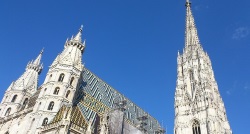
Stephansplatz is one of Vienna’s main orientation points and a busy transport hub. The cathedral dominates the square, while pedestrian streets lead from it toward shops and historic lanes. If you plan to enter the cathedral or climb a tower, check ticket and opening information separately. The walking route itself only covers the public square and surrounding streets.
Graben and Kohlmarkt
Graben and Kohlmarkt are central shopping streets with historic façades, cafés and monuments. They are part of the everyday city as well as the visitor route, so expect crowds at busy times. Look upward at the architecture and side streets rather than walking only along the main shopping frontage.
Michaelerplatz and the Hofburg
Michaelerplatz marks the transition from the medieval centre to the Hofburg complex. From here, you can see the palace entrance, the Spanish Riding School area and archaeological remains. The Hofburg contains several separate museums and attractions, not a single all-inclusive visitor route. Decide which interior, if any, you want to visit before buying a ticket.
Heldenplatz and the Ring
Heldenplatz opens onto a broad space beside the Hofburg and offers a strong view of the imperial setting. From there, the Ringstrasse connects to the State Opera and major museums. The boulevard is impressive, but traffic crossings and building distances can make it more tiring than the map suggests. Use public transport to skip a section if needed.
How long to allow for a city walk
A central exterior route takes about two to three hours at a relaxed pace without entering attractions. Add time for photographs, coffee, shopping or a sit-down meal. Entering the cathedral, a palace museum or an art museum can add one or more hours, depending on the visit. If you have a timed tour or concert later, leave a buffer rather than relying on the shortest walking estimate.
Many visitors overestimate how many sights fit into one day because central landmarks appear close together. A better plan is to choose a main route and one optional stop. You can always return to another district on a different day, especially if the weather or crowds make walking slower.
Walking conditions, weather and accessibility
Vienna’s central streets are mostly paved, but some areas have cobblestones, uneven surfaces and busy crossings. Wear supportive shoes and plan short rest breaks. In summer, carry water and take shade breaks; in winter, check daylight and forecast because rain, cold or icy surfaces affect the pace. During Christmas markets, parades or other public events, pedestrian routes may be crowded or redirected.
Visitors with limited mobility can shorten the route and use metro, tram or bus for longer distances. Check step-free station access and the entrances of any attraction you intend to enter. Benches and cafés are available in the centre, but seating is not evenly spaced along every street. The City of Vienna’s walking information can help with accessible route planning.
Choosing a guided walk
A guide can explain the history behind courtyards, monuments and buildings that a self-guided visitor might pass without context. Group tours provide a fixed route and a chance to ask questions, while private tours can adapt to a particular interest. Before booking, check the language, duration, group size, meeting point, cancellation rules and whether entrance fees are included.
The Tiqets listing linked on this page describes a two-hour guided walk in English, German or Italian. It covers central landmarks from the exterior and does not include museum entry. Meeting point and route details may vary, so read the product information for the date you choose. A guided tour can be a good introduction at the start of a stay; you can revisit favourite places independently afterward.
When a hop-on hop-off bus is useful
A sightseeing bus can complement walking when you want to reach districts outside the historic centre, such as Schönbrunn or the Prater, without planning every metro connection. It is less useful if your only goal is the compact old town, where walking and public transport are often faster. Compare route coverage, stop location, service frequency, duration and the current cancellation terms before buying.
Do not assume an old bus timetable or route list remains valid. Operators can alter lines and seasonal schedules. Check whether the ticket includes a walking tour or audio guide and whether those are available in your preferred language. If visiting during a busy weekend, leave enough time for queues at stops.
Walk independently or join a tour?
Independent walking suits visitors who want flexibility and are comfortable using a map. A guided walk is helpful when you want historical explanation or a structured introduction. Both approaches can work together: join a tour early in your visit, then use the same route as a starting point for exploring side streets and museums. Keep a simple route in mind so you can shorten it if you become tired.
Frequently asked questions about walking in Vienna
Is Vienna’s centre walkable?
Yes. Many central sights are close enough to connect on foot, though crowds, cobblestones and museum visits add time.
Can I see the main sights in one day?
You can see several exteriors in one day, but entering multiple museums and palaces requires more time. Choose a few priorities.
Is a guided walking tour worth it?
It can be useful for context and route planning. Compare its language, stops and duration with what you want to see.
Do walking tours include museum entry?
Not necessarily. The Tiqets guided walk on this page focuses on exteriors and does not include interior admission. Check every listing.
What should I bring?
Wear comfortable shoes, carry water and use an offline map. In changing weather, bring a light layer or rain protection.
7 comments