 Posted by
The Cathedral Treasury Vienna (German: Domschatz) is one of the most fascinating
and underrated attractions in the historic center of Vienna.
Located inside St. Stephen’s Cathedral,
the treasury preserves centuries of religious art, precious objects,
and symbolic treasures connected to Austria’s spiritual and political history.
While many visitors focus on the cathedral interior, towers, or catacombs,
the Cathedral Treasury offers a quieter, more reflective experience.
It reveals how religion, craftsmanship, power, and wealth were closely linked
throughout the Middle Ages and early modern period.
For travelers interested in history, art, or sacred objects,
the Cathedral Treasury is a natural extension of a Stephansdom visit.
What Is the Cathedral Treasury Vienna?
The Cathedral Treasury Vienna is a collection of sacred objects
belonging to St. Stephen’s Cathedral and the Archdiocese of Vienna.
These items were used in religious ceremonies,
stored for protection, or donated by rulers, bishops, and wealthy patrons.
Unlike art museums, the treasury focuses on the spiritual meaning of objects.
Reliquaries, liturgical garments, manuscripts, and precious vessels
were never intended as decoration alone.
They played an active role in worship and religious life.
Today, the treasury allows visitors to see these rare objects up close,
protected in climate-controlled display cases
while still preserving their original religious context.
Historical Background
St. Stephen’s Cathedral has been the spiritual heart of Vienna since the 12th century.
Over time, it accumulated valuable gifts from emperors,
noble families, bishops, and religious institutions.
During the Middle Ages, church treasures had multiple purposes:
- They honored God and the saints
- They demonstrated political and religious power
- They acted as financial reserves in times of crisis
Many objects in the Cathedral Treasury survived wars,
fires, and political upheavals.
Their survival tells a story not only of faith,
but also of careful protection and cultural continuity.
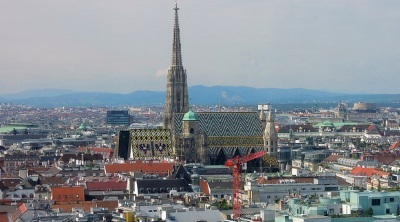
St. Stephen’s Cathedral and Dom Museum tickets
This combination covers the cathedral and Dom Museum Wien, with an audio guide for the church, a guided catacomb visit and access to both towers. Check the product details and voucher exchange point before booking.
What You Can See in the Cathedral Treasury
The Cathedral Treasury Vienna contains a compact but highly valuable collection.
Even visitors with limited time can appreciate its highlights.
Reliquaries
Reliquaries are containers holding relics of saints,
such as bones, clothing fragments, or objects associated with holy figures.
They were believed to offer spiritual protection and blessings.
Many reliquaries in the treasury are masterpieces of medieval goldsmith work,
decorated with gemstones, enamel, and symbolic imagery.
Vienna Travel Guides – Useful Before Your Visit
Liturgical Objects
The treasury displays chalices, monstrances, crosses,
and other items used during Catholic ceremonies.
These objects were crafted from gold and silver
and often richly decorated.
Their design reflects theological ideas:
light, purity, sacrifice, and reverence.
Vestments and Textiles
Liturgical garments worn by bishops and priests
are another important part of the collection.
Embroidered fabrics, silk, and gold thread
demonstrate the high level of craftsmanship.
Textiles are especially fragile,
which makes their preservation in the treasury particularly valuable.
Manuscripts and Sacred Art
Selected manuscripts and devotional objects
provide insight into medieval religious education and practice.
They show how faith was taught visually
in a time when most people could not read.
Religious and Cultural Significance
The Cathedral Treasury is not only an art collection.
It represents how religion shaped daily life in Vienna for centuries.
Church treasures were used in:
- Major religious festivals
- Royal weddings and funerals
- Public processions and ceremonies
For historians, the treasury offers a direct connection
to how people understood faith, authority, and tradition.
For visitors, it provides a deeper layer of meaning
beyond architecture alone.
How Much Time Should You Plan?
The Cathedral Treasury is relatively compact,
making it easy to include in a cathedral visit.
- Quick visit: 20–30 minutes
- Standard visit: 45 minutes
- In-depth visit: 60 minutes
Audio guides or printed explanations
can significantly enhance the experience.
Best Time to Visit
The treasury is usually quieter than the main cathedral interior.
Late morning and early afternoon are often calm,
especially on weekdays.
If the cathedral itself is crowded,
the treasury offers a peaceful alternative
without leaving the building.
Location and How to Get There
The Cathedral Treasury is located inside
St. Stephen’s Cathedral at Stephansplatz.
- Metro: U1, U3 (Stephansplatz)
- On foot: Central Vienna, city walk area
For transport details, see the
Vienna public transport guide.
Combine the Cathedral Treasury with Other Attractions
Because of its central location,
the Cathedral Treasury fits easily into a half-day itinerary.
Good combinations include:
- St. Stephen’s Cathedral Interior & Towers
- Hofburg Vienna
- A city walk through Graben and Kohlmarkt
Who Should Visit the Cathedral Treasury?
- Visitors interested in religious history
- Art and medieval craftsmanship enthusiasts
- Travelers seeking quieter museum experiences
- Anyone visiting St. Stephen’s Cathedral in depth
Why the Cathedral Treasury Is Worth It
Many visitors overlook the Cathedral Treasury,
focusing only on the cathedral interior or towers.
This makes the treasury one of Vienna’s hidden highlights.
It offers:
- Rare objects not visible elsewhere
- A calm atmosphere in a busy location
- Deeper understanding of Vienna’s religious past
For those who enjoy meaningful cultural experiences,
the Cathedral Treasury adds depth and context
to any visit to Vienna’s historic center.
Understanding the Cathedral Treasury
The Cathedral Treasury, or Domschatz, is connected with St. Stephen’s Cathedral and its long religious and civic history. Its objects are not simply decorative valuables. Reliquaries, liturgical vessels, vestments and devotional images show how the cathedral served worshippers, rulers and the city over many centuries. The display is relatively compact compared with a large art museum, but the objects reward a slower look at their materials, craftsmanship and use.
When visiting, distinguish the Cathedral Treasury from the Dom Museum Wien. The Dom Museum is a separate museum on Stephansplatz with a broader collection that includes sacred art, historical objects and contemporary works. Some combined tickets cover both, while other visits focus on the cathedral, treasury area, towers or catacombs. Read the product description carefully so you know which places are included.
What to look for in the collection
Reliquaries and precious metalwork
Reliquaries were made to protect and display relics associated with saints. Their precious materials and elaborate forms reflect the importance attached to the objects they contained. Look closely at how metal, enamel, gems and sculpted details are combined. The craftsmanship can be easier to appreciate when you compare several objects rather than focusing only on the most ornate one.
Vestments, textiles and liturgical objects
Clothing and ceremonial objects reveal how religious practice changed over time. Embroidery, fabric and colour each have a function within the liturgy, while the condition of historic textiles also tells a story about preservation. The collection can help visitors understand the cathedral as a living institution, not only as an architectural monument.
Manuscripts, paintings and devotional art
Written and painted objects connect faith, learning and artistic production. Their scale is often smaller than the cathedral itself, so give your eyes time to adjust to details. Read the captions for information about date, maker and original use. As with any museum, the current display may change when objects are loaned or conservation work is required.
Tickets and how to plan the visit
The cathedral’s official all-inclusive ticket currently costs €25 and includes a self-guided visit to the church with audio guide, a presentation of the cathedral treasury at the west gallery, one public catacomb tour, and access to both towers. The official ticket information estimates about two and a half hours for the full package. Individual options are also available. Check the official ticket shop for the latest prices, visiting windows and restrictions.
The Tiqets combination linked on this page includes St. Stephen’s Cathedral and the Dom Museum Wien, with a cathedral audio guide, a guided catacomb visit and access to both towers. It is useful if you want to see the museum as well as the cathedral. The Cathedral Treasury and Dom Museum are related but are not the same institution; check the current inclusions and voucher exchange instructions before paying.
Opening hours for tourist visits differ from the cathedral’s general opening hours because services take priority. The official site lists sightseeing periods in the morning and afternoon, with different Sunday and holiday hours. Catacomb tours run at set times and may change at short notice. Arrive with enough time to collect or exchange tickets and ask staff which entrance or queue applies to your chosen visit.
How to approach the objects
A short, thoughtful visit is more useful than racing past every display. Begin with the introductory information, then follow the objects that catch your interest. Consider what an object was made for, who might have commissioned it and how it would have been used during a service. Materials can suggest expense and status, while repeated motifs may connect pieces created in different periods.
Some visitors arrive after seeing the cathedral interior and are ready to leave quickly. It is worth allowing time to notice the smaller works, which can be easily overlooked after the scale of the nave and towers. If you are travelling with children, give them a simple theme to look for—such as animals, colours or repeated symbols—rather than asking them to read every label.
Accessibility, photography and respectful behaviour
St. Stephen’s is an active place of worship. Visitors should dress respectfully, speak quietly and follow staff instructions. Areas may be closed during services or religious events. Photography rules can differ between the church, treasury displays and other areas; check posted notices and do not use flash where it is prohibited.
The full all-inclusive route includes towers and underground spaces, which are not all suitable for visitors with reduced mobility. The South Tower requires climbing 343 steps; the North Tower has an elevator, but access to the wider ticket package still depends on the specific areas included. Contact the cathedral before booking if you need step-free access or have questions about a particular part of the route.
Location and nearby sights
The cathedral stands at Stephansplatz in Vienna’s first district, with U1 and U3 metro services close by. It is easy to reach on foot from the Graben, Kärntner Straße and many central hotels. Our Vienna transport guide explains local tickets, while the city walk guide offers a route connecting the cathedral with the Hofburg and Ringstrasse.
After the visit, you can continue to the Dom Museum Wien next door, walk to the Hofburg, or explore the streets around Graben. The St. Stephen’s Cathedral tower guide covers the different viewpoints in more detail. For another major collection nearby, see the Kunsthistorisches Museum guide.
Frequently asked questions
Is the Cathedral Treasury the same as the Dom Museum Wien?
No. They are connected with the cathedral and its history, but they are separate visitor experiences. A combination ticket may include both, so check the inclusions.
Does the all-inclusive cathedral ticket include the treasury?
The official ticket description includes a presentation of the cathedral treasure at the west gallery, along with the church, a catacomb tour and both towers. Verify current conditions before visiting.
How much time should I allow?
The official all-inclusive package is estimated at about two and a half hours. A focused visit to the treasury area alone takes less time, but allow extra time for ticket collection and the cathedral.
Can I visit the catacombs independently?
No. The catacombs are visited with a public guided tour. Check the timetable at the cathedral because the next tour time can vary.
Is the full route accessible for wheelchair users?
Not every part is step-free. Contact the cathedral in advance about accessible areas and avoid assuming that the towers or underground route are accessible.
Further Vienna reading
Where to stay near the Cathedral
Accommodation in the first district is convenient for early visits and evening walks, though prices may be higher than in outer districts. Compare a central hotel with a stay near a metro station and check how far you are willing to walk with luggage.
Hotels near St. Stephen’s Cathedral
Staying near Stephansplatz makes it easy to visit the cathedral early and explore the old town on foot. Compare location, reviews and cancellation terms.
Conclusion
The Cathedral Treasury Vienna is a compact yet powerful attraction
that reveals the spiritual and artistic wealth
hidden behind St. Stephen’s Cathedral.
By combining precious objects with historical context,
it offers a deeper understanding of Vienna’s past.
Whether you are interested in religion, history, or craftsmanship,
the Cathedral Treasury is well worth the time.
Link tip: Cathedral Florence: A lot is similar: Here there is also a cathedral museum, a cathedral treasure, ascent of the church tower, underground corridors, etc.
Link tip: Westminster Abbey London: One of the greatest churches in Britain