 Posted by
A city tour is a useful way to understand Vienna before choosing individual museums and palaces. The historic centre is compact enough for a guided walk, while a sightseeing bus helps cover places farther apart. These are different experiences: a walking guide can explain streets and buildings in detail; a bus gives a broad overview and lets you stop near several major attractions.
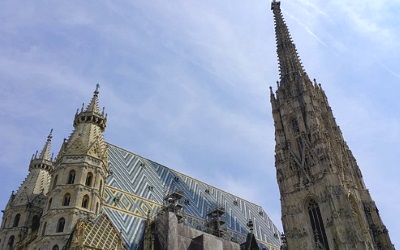
Which type of city tour should you choose?
For a first visit, choose according to your time, mobility and interests. A guided walk suits travellers who want stories about the Habsburgs, architecture and everyday life. A hop-on hop-off bus suits visitors who want to see several districts without planning every tram connection. A self-guided walk costs less and lets you control the pace. Some visitors enjoy both on different days, but buying two tours for the same afternoon rarely leaves enough time to explore anything.
A bus ticket is not the same as a normal public transport ticket. Sightseeing buses use their own routes and stops; the U-Bahn, trams and regular buses require separate tickets. Read our guide to Vienna public transport before deciding which option fits your schedule. If you plan several attractions, compare the Vienna PASS because it can include sightseeing bus rides during its validity.
Guided Vienna walking tour
A two-hour guided walk covers central landmarks such as the Hofburg area, Heldenplatz and St. Stephen’s Cathedral. This particular tour covers exteriors; museum admission is not included. Check the offered language and meeting point for your date.
A guided walk through the old town
Central Vienna rewards slow exploration. Around Stephansplatz, narrow streets lead to elegant squares and churches; farther west the Hofburg courtyards show the scale of the former imperial residence. A guide can explain how these places connect, which is especially useful on a first day. The walking tour on Tiqets is advertised as about two hours and offers live guiding in English, German and Italian on the listed product. The route and availability can change, so check the booking details before paying.
Start with St. Stephen’s Cathedral if you are finding your own way. The cathedral is a familiar orientation point, and the cathedral tower is a separate visit for views. Then follow the streets toward the Hofburg. Its exterior courtyards are accessible as part of a walk, while the museums and Imperial Apartments have their own admission rules. A walking tour that passes the buildings does not automatically include entry.
What to check before booking a walking tour
Confirm the language, exact meeting point, duration, group size and whether any building interiors are included. Vienna offers tours with similar names but different themes. Arrive a little early, especially if the meeting point is a small square rather than a landmark entrance. Wear comfortable shoes: cobblestones, crossings and standing breaks can be tiring even though the old town distances are moderate.
Morning walks leave the afternoon free for a museum. Afternoon walks can work well after arrival, although a late start may make it difficult to fit in a timed palace visit. If you have a specific museum ticket, schedule it with enough space before or after the tour. A quiet café break between activities makes a more pleasant day than rushing across the city.
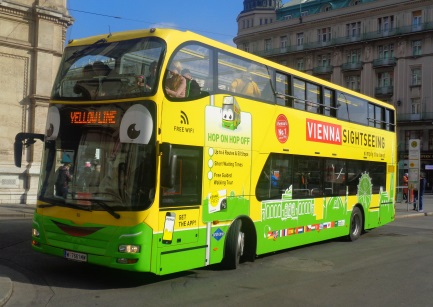
Hop-on hop-off buses in Vienna
Open-top or panoramic sightseeing buses cover a larger area than a city-centre walking tour. The Vienna Sightseeing product offered on Tiqets has 24-, 48- and 72-hour ticket options. It allows you to leave the bus at a stop and continue on a later departure. The operator’s current route map and seasonal timetable determine the stops and frequency, so check both for your travel date rather than relying on an old printed route description.
The bus makes sense when you want an orientation ride followed by one or two longer stops. For example, you could visit Schönbrunn Palace or Vienna Zoo on a day based around the western part of Vienna. Another day could focus on Belvedere, the Prater and the Giant Ferris Wheel. Check whether the route you choose actually serves each stop on your date.
Vienna sightseeing bus
Compare the operator’s 24-, 48- and 72-hour options, route map and departure information. The bus is useful for sightseeing between areas, while regular Vienna public transport is a separate network.
How to use a bus ticket well
Begin with a full loop if you want an overview, then pick a small number of places to revisit. Getting off at every stop can spend most of the day waiting for the next bus. If you have only one day, allow generous time for a major attraction and a meal. Winter schedules may differ from summer schedules; plan around the operator’s current departure information, especially later in the afternoon.
For visitors with limited walking ability, a bus can reduce long journeys between districts. You will still need to get from a stop to each entrance, and some sites have extensive grounds. Check accessibility for the specific bus and attraction before booking. Families should also look at operating hours and the length of the ride rather than assuming children will want to remain on board for several hours.
Self-guided Vienna city walk
You can also explore the centre without a paid guide. A simple route links Stephansplatz, Graben, Michaelerplatz, the Hofburg courtyards and the Ringstrasse. It gives you time to stop for photographs or choose an indoor visit when the weather changes. Our Vienna city walk provides a starting point, while individual guides to the Spanish Riding School and Kunsthistorisches Museum help you choose longer stops.
This option is especially suitable for repeat visitors who know the broad history or prefer to set their own pace. The trade-off is that you must research museum entrances, opening hours and tickets yourself. A printed or downloaded map helps where the Hofburg’s multiple courtyards make orientation less obvious. Leave time to sit down; Vienna’s centre is better enjoyed as a series of short walks than a race between landmarks.
Special-interest tours and nearby sights
Music-focused travellers can combine a central walk with Mozarthaus Vienna and an evening classical concert. Art lovers may begin around the Hofburg and continue to the Leopold Museum or mumok. Families can balance a short city orientation with the Natural History Museum or a separate day at Schönbrunn.
These combinations are suggestions, not all-day packages. Each venue has separate entrance requirements and opening hours. For museums and palace interiors, reserve the entry that suits your actual timetable. City tours often show the outside of famous buildings, so check the product’s included services carefully if interior visits are important to you.
Suggested one-day plans
First day: walk and one museum
Start with the guided old town walk, take lunch near the centre, then choose one museum or palace experience. The Hofburg is convenient if you want to remain near the walking route. For a more focused art visit, allow several hours for the Kunsthistorisches Museum. Finish with a relaxed meal rather than adding a second large museum.
Second day: sightseeing bus and outer districts
Use a sightseeing bus for the overview and choose one substantial stop such as Schönbrunn or Belvedere. If the bus timetable does not fit your chosen museum slot, use the U-Bahn or tram for that journey instead. A bus pass can be enjoyable without treating it as the fastest means of transport. This distinction helps prevent missed reservations.
Short visit: independent centre route
If you have only a few hours, walk between the cathedral and Hofburg, then stop for coffee. A two-hour guided tour can also fit well, but allow time to reach its meeting point. Visitors travelling to or from the airport should leave margin for connections and use our Vienna Airport guide for practical transport planning.
Walking tour or sightseeing bus: a closer comparison
A walking tour gives you more opportunity to ask questions and examine details at street level. The distances are smaller, and the group typically spends time at individual squares and façades. Its usefulness depends on the guide’s explanation and your interest in history. A bus provides a moving introduction to the city, covers longer distances and may be more comfortable when you need to reduce continuous walking. It usually offers recorded commentary rather than the same conversation with a guide.
Neither replaces a visit inside an attraction. To see the Hofburg museums or a palace interior, plan separate admission. Check what a tour ticket says about entrances; the wording “see the palace” often means the exterior. If you have a fixed time slot, allow for traffic, walking between the stop and entrance, and queues at security. For the bus, look at the timetable for the exact route serving that attraction.
Seasons and weather
Vienna can be visited throughout the year, but a city tour feels different in summer heat, autumn rain and winter cold. An early or later walk can be more comfortable in warm weather. In winter, shorter outdoor stretches combined with a museum or café are often easier than several uninterrupted hours outside. Bring a light rain layer and shoes suited to paved streets; an umbrella can be awkward in a crowded guided group.
Sightseeing buses usually operate in changing seasonal patterns. A route that looks convenient on a summer map may have different intervals later in the year. Check the actual schedule during the purchase process and again shortly before departure. The weather also affects whether an open upper deck is pleasant. A covered seat can still give a good overview, even if photographs through glass are less convenient.
Meeting points and realistic timing
Do not assume that a guided tour begins at the most famous sight mentioned in its description. Read the exact meeting point on your booking confirmation and identify the nearest station in advance. The referenced walking tour starts at Minoritenplatz, while individual operators can use different meeting places. Allow enough time to find the guide; arriving late may mean missing the tour entirely.
If you book two activities on the same day, leave at least a comfortable transfer and meal break between them. A two-hour walk can end later than its advertised duration if the group moves slowly. Likewise, a bus route is affected by traffic and boarding times. When planning a concert in the evening, reserve time to return to your accommodation before the performance rather than remaining on a long sightseeing circuit.
Who benefits most from each option?
First-time visitors who enjoy history often get the most from a live walk. People with limited time and a long list of widely separated sights may appreciate a sightseeing bus, provided they check the route. Travellers on a smaller budget can use regular transit and a self-guided walk. Families should consider attention spans, rest opportunities and the time spent waiting outdoors. Repeat visitors might enjoy a specialist theme instead of another overview of the centre.
A practical decision is to write down your three main sights first. If they are all in the old town, walk. If they are across several districts, compare the sightseeing bus with normal public transport. If most require admission, compare individual tickets with a pass. This simple check prevents you paying for a broad tour that does not actually serve your priorities.
Tickets, costs and common mistakes
Compare what each ticket actually covers. A guided walk usually pays for the guide’s time and does not include admission to the buildings seen from outside. A sightseeing bus pays for its own network, not local U-Bahn travel. A city pass may include some tours or buses, but the attractions, reservation requirements and dates vary. Avoid counting an attraction twice when comparing a tour with a pass.
Prices and cancellation terms are shown for your selected date during checkout. If you travel with children, check age categories separately. Ask whether audio commentary or live guiding is provided in your preferred language. For mobility needs, look at route surfaces, walking distance and the exact boarding arrangements. These details matter more than a generic promise to see all of Vienna in one day.
Accommodation in Vienna
Compare central hotels or accommodation near a metro station; check cancellation terms and the final price before booking.
Our practical recommendation
Choose a guided walk if you want local explanation of the centre; choose a sightseeing bus if your priority is the city’s wider geography. For many visitors, a self-guided central walk plus one carefully chosen ticketed attraction is enough. Use the specific Tiqets product pages above for current availability, and verify the operator’s timetable shortly before travelling.
For further planning, see local transport, Vienna PASS, getting to Vienna and Naschmarkt. They help turn a tour into a workable itinerary with sensible travel time and breaks.
5 comments